
en
en
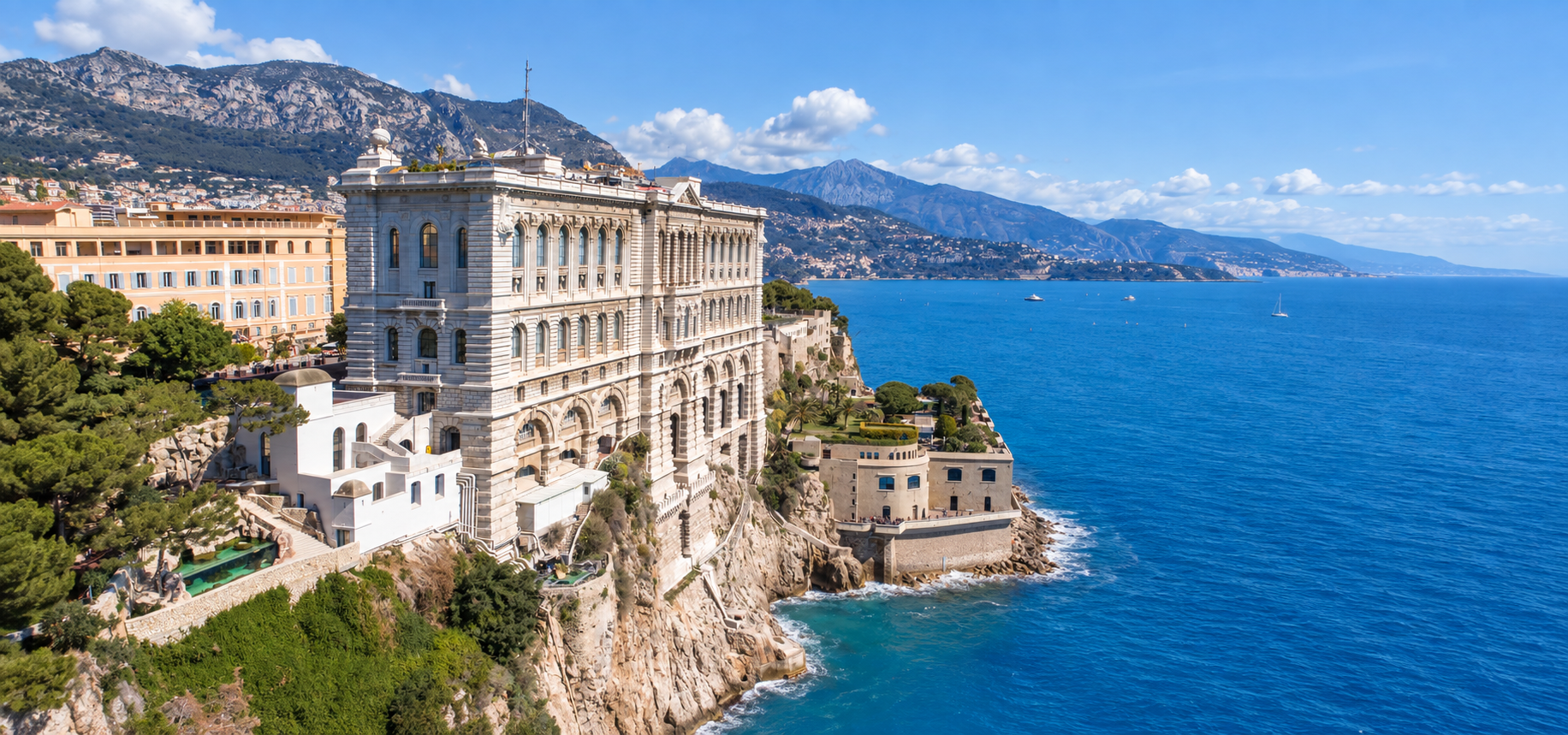
Monaco is about much more than its luxury hotels, yachts and Formula 1 Grand Prix. Despite its remarkably compact size, the Principality boasts a rich cultural heritage spread across several of its most iconic districts. From the Oceanographic Museum of Monaco, perched on the Rock, to the two villas of the New National Museum of Monaco, as well as the cultural institutions of Fontvieille and Jardin Exotique, each museum reveals a different facet of the Principality.
Visiting them offers an opportunity to discover Monaco’s history, art and heritage, while also gaining a better understanding of the distinctive atmospheres of Monaco-Ville, Larvotto, Jardin Exotique and Fontvieille. For visitors and prospective residents alike, Monaco’s museums provide another way to explore the Principality through its culture, architecture, landscapes and lifestyle.
Monaco’s main museums are located across several districts of the Principality, each offering a distinctive atmosphere and setting.
The Oceanographic Museum, located in Monaco-Ville, overlooks the Mediterranean from the Rock. It stands close to the Prince’s Palace, Monaco Cathedral and the Saint-Martin Gardens, in the heart of the Principality’s historic district.
Near Larvotto, on Avenue Princesse Grace, Villa Sauber, one of the two sites of the New National Museum of Monaco, enjoys a prime location close to the beaches, the Grimaldi Forum and the Japanese Garden. The area is characterised by its elegant atmosphere and its close connection to the Mediterranean.
In Jardin Exotique, Villa Paloma, the second site of the New National Museum of Monaco, is set in an elevated residential area offering beautiful views over the Principality. The same district is also home to the Museum of Prehistoric Anthropology, dedicated to prehistory and archaeological discoveries from the region.
Finally, in Fontvieille, the Museum of Stamps and Coins offers another perspective on Monaco’s heritage. It is located close to the marina, the Princess Grace Rose Garden and the Louis-II Stadium, in one of Monaco’s most pleasant residential districts.
This distribution of museums makes it possible to explore Monaco’s cultural attractions while discovering neighbourhoods with very different identities: historic heritage in Monaco-Ville, Mediterranean living in Larvotto, panoramic views in Jardin Exotique and a residential atmosphere in Fontvieille.
Overlooking the Mediterranean from the cliffs of Monaco-Ville, the Oceanographic Museum is one of the Principality’s most iconic cultural institutions. Founded by Prince Albert I, it is dedicated to the marine world, ocean research and raising awareness of life beneath the surface. Its location is also one of its greatest attractions. The museum fits naturally into a visit to the Rock, the historic heart of Monaco. Just a few minutes away on foot are the Prince’s Palace, Monaco Cathedral, the Saint-Martin Gardens and the old streets of Monaco-Ville. From this elevated setting, visitors can also enjoy sweeping views over the Mediterranean, Port Hercule and the Principality’s more contemporary districts.
Living in Monaco-Ville offers a very different experience from the large modern residential developments found in Larvotto or Monte-Carlo. The district stands out for its historic architecture, older buildings, narrow streets and particularly limited residential supply. Apartments available on the Rock are especially attractive to buyers who value architectural character, authenticity and immediate proximity to Monaco’s historic institutions. In a property market where each district has a highly distinctive identity, Monaco-Ville therefore occupies a unique position.
Located on Avenue Princesse Grace, Villa Sauber is one of the two sites of the New National Museum of Monaco, the NMNM. This Belle Époque villa combines architectural heritage with contemporary creation. It hosts exhibitions that contribute to showcasing the Principality’s artistic and cultural history. Its location also offers the opportunity to discover one of the most prestigious areas along Monaco’s coastline. Nearby are Larvotto, the Grimaldi Forum, the Japanese Garden and Avenue Princesse Grace. More broadly, this part of Monaco is now also defined by its proximity to Mareterra.
Larvotto is closely associated with the sea and a distinctly contemporary lifestyle. Its beaches, promenades and proximity to several cultural institutions make it a particularly sought-after area for enjoying Monaco on foot. From a residential perspective, Avenue Princesse Grace and Larvotto feature apartments overlooking the Mediterranean, generous terraces and residences offering high-end amenities. The proximity of Villa Sauber perfectly reflects the identity of the district, where culture, architecture, the beach and luxury real estate come together in an exceptionally exclusive setting.
The second site of the New National Museum of Monaco, Villa Paloma is located on Boulevard du Jardin Exotique. The villa hosts exhibitions dedicated to modern art, contemporary creation and Monaco’s artistic heritage. Its elevated location also gives it a very different identity from Villa Sauber. In this part of Monaco, the topography plays an essential role in the landscape. Views extend across several districts of the Principality, Port Hercule and the Mediterranean.
Jardin Exotique offers an attractive alternative to Monaco’s districts located directly along the seafront. The area is appreciated for its elevated position and predominantly residential character. Many buildings benefit from open views over Monaco and the Mediterranean. The district features family apartments, properties with generous terraces and residences offering convenient access to La Condamine, Fontvieille and the main routes connecting Monaco with France. Villa Paloma also contributes to the cultural identity of a district where architecture, panoramic views and residential living come together naturally.
The Jardin Exotique district is also home to the Museum of Prehistoric Anthropology of Monaco. Dedicated to prehistory, human evolution and archaeological discoveries from the region, the museum offers a more scientific perspective on the history of Monaco and the Mediterranean basin. Its proximity to Villa Paloma brings together two very different cultural approaches within the same district: modern and contemporary art on one side, and human origins and archaeology on the other. This concentration of cultural institutions contributes to the distinctive character of Jardin Exotique and complements its residential environment.
In Fontvieille, the Museum of Stamps and Coins offers an original perspective on the history of the Principality through its philatelic and numismatic heritage. Its collections trace the development of Monaco’s postal and monetary history and reflect part of the Principality’s institutional heritage. A visit to the museum also provides an opportunity to explore Fontvieille, a district designed around a balance of residential areas, economic activity, public facilities and a maritime setting. The marina, the Princess Grace Rose Garden, the Louis-II Stadium, shops, restaurants and promenades create a particularly pleasant environment to discover on foot.
Fontvieille has a very different identity from Monte-Carlo or the Carré d’Or. Its marina, green spaces and pedestrian walkways give the district a more residential atmosphere, particularly appreciated for the ease of everyday life. The property market includes numerous residences located around the marina as well as in the quieter parts of the district. For buyers looking for a residential environment with shops, promenades and amenities close at hand, Fontvieille is one of Monaco’s most complete districts.
The distribution of museums across the Principality highlights just how different Monaco’s districts can be, despite its compact size. Monaco-Ville brings together a large part of the Principality’s historic heritage around the Rock and the Oceanographic Museum. Larvotto and Avenue Princesse Grace combine contemporary art, architecture, beaches and prestigious residences around Villa Sauber. Jardin Exotique stands out for its elevated position, panoramic views and the presence of Villa Paloma and the Museum of Prehistoric Anthropology. Fontvieille, meanwhile, combines heritage, the marina, green spaces and residential living. In Monaco, just a few hundred metres can be enough to completely change the landscape, architecture, type of residence and pace of life. It is precisely this diversity that also makes the Monaco property market so distinctive.
There is no single ideal district in Monaco: the right choice depends on lifestyle and the nature of the property project. For those who value historic surroundings and wish to live close to the Oceanographic Museum, Monaco-Ville is a natural choice. La Condamine offers an alternative with immediate access to the Rock and Port Hercule. For a lifestyle combining the Mediterranean, beaches and high-end residences, Larvotto, Avenue Princesse Grace and Mareterra are particularly suited to buyers seeking a seafront location. Jardin Exotique is especially attractive to buyers who prioritise elevated views, a residential environment and, in some cases, larger living spaces. In Fontvieille, the marina, green spaces, shops and promenades support a practical and comfortable residential lifestyle. Other areas, such as Monte-Carlo, the Carré d’Or and La Rousse, meet different expectations in terms of central location, prestige, views and services. Choosing an apartment in Monaco therefore involves much more than selecting an address: orientation, views, floor level, surface area, terrace, residence amenities and the desired lifestyle are all key factors.
Monaco’s appeal is based on a combination of factors that go far beyond its property market. Museums, exhibitions, Belle Époque architecture, princely heritage, beaches, gardens, gastronomy and international events all come together within a territory where the main districts remain close to one another. This exceptional concentration contributes directly to the quality of life enjoyed by residents. In Monaco, it is possible within just a few minutes to move from a historic district to a contemporary seafront, from a marina to a museum, or from a modern residence to gardens overlooking the Mediterranean. For an international clientele, this proximity between culture, leisure, services and luxury real estate is one of the Principality’s most distinctive and sought-after qualities.
Choosing an apartment in Monaco is not simply a matter of comparing surface areas or prices per square metre. Each district has its own residences, architecture, views, atmosphere and lifestyle. PIRAS Immobilier, a Monaco real estate agency specialising in luxury property, assists an international clientele with buying, selling, renting and property valuation projects throughout the Principality. From Larvotto to Monte-Carlo, from Fontvieille to Jardin Exotique, and from La Rousse to the Carré d’Or, our in-depth knowledge of the Monaco property market allows us to guide each search according to the criteria that truly matter: location, sea view, terrace, amenities, surface area, family residence, pied-à-terre, penthouse or more confidential opportunities. Are you looking for an apartment for sale in Monaco, a property to rent, or would you like to obtain a confidential property valuation?PIRAS Immobilier is here to help you identify the district and property best suited to your project.
What are the main museums in Monaco?
The main cultural institutions include the Oceanographic Museum, the New National Museum of Monaco – Villa Sauber and Villa Paloma, the Museum of Prehistoric Anthropology and the Museum of Stamps and Coins.
What is the most famous museum in Monaco?
The Oceanographic Museum of Monaco, located on the Rock in Monaco-Ville, is one of the Principality’s most iconic and internationally recognised cultural institutions.
Where are the main museums in Monaco located?
The Oceanographic Museum is located in Monaco-Ville. Villa Sauber is situated near Larvotto, while Villa Paloma and the Museum of Prehistoric Anthropology are located in the Jardin Exotique area. The Museum of Stamps and Coins is in Fontvieille.
Which district in Monaco combines beaches and culture?
Larvotto is particularly well suited to this combination thanks to its beaches, Avenue Princesse Grace and its proximity to Villa Sauber, the Grimaldi Forum and the Japanese Garden.
Which district should you choose to buy a luxury apartment in Monaco?
The choice depends on the buyer’s priorities. Larvotto and Mareterra are ideal for those seeking ultra-prime seafront living. Monte-Carlo and the Carré d’Or offer greater centrality, while Fontvieille provides a residential environment around the marina. La Rousse and Jardin Exotique also feature numerous residences with open views.
Are Monaco’s museums easily accessible from residential districts?
Monaco’s compact size and the close proximity of its different districts make it possible to reach the main cultural institutions quickly from most residential areas of the Principality.
Why is the district important when buying property in Monaco?
In Monaco, the choice of district has a direct impact on lifestyle. Proximity to the sea, views, tranquillity, shops, restaurants, marinas, green spaces, architecture and type of residence can vary significantly from one area to another. Choosing an apartment is therefore closely linked to choosing the right environment.
PIRAS Real Estate has been advising clients on property sales, rentals, acquisitions and management in Monaco and on the French Riviera since 1976.
PIRAS REAL ESTATE
Château Périgord Residence
6 Lacets Saint Léon
98000 Monaco
From 9 a.m. to 7 p.m. – Our team is here to welcome you
French – Italian – English – Russian – Spanish
This site is protected by reCAPTCHA and the Google Privacy Policy and Terms of Service apply.
