
en
en
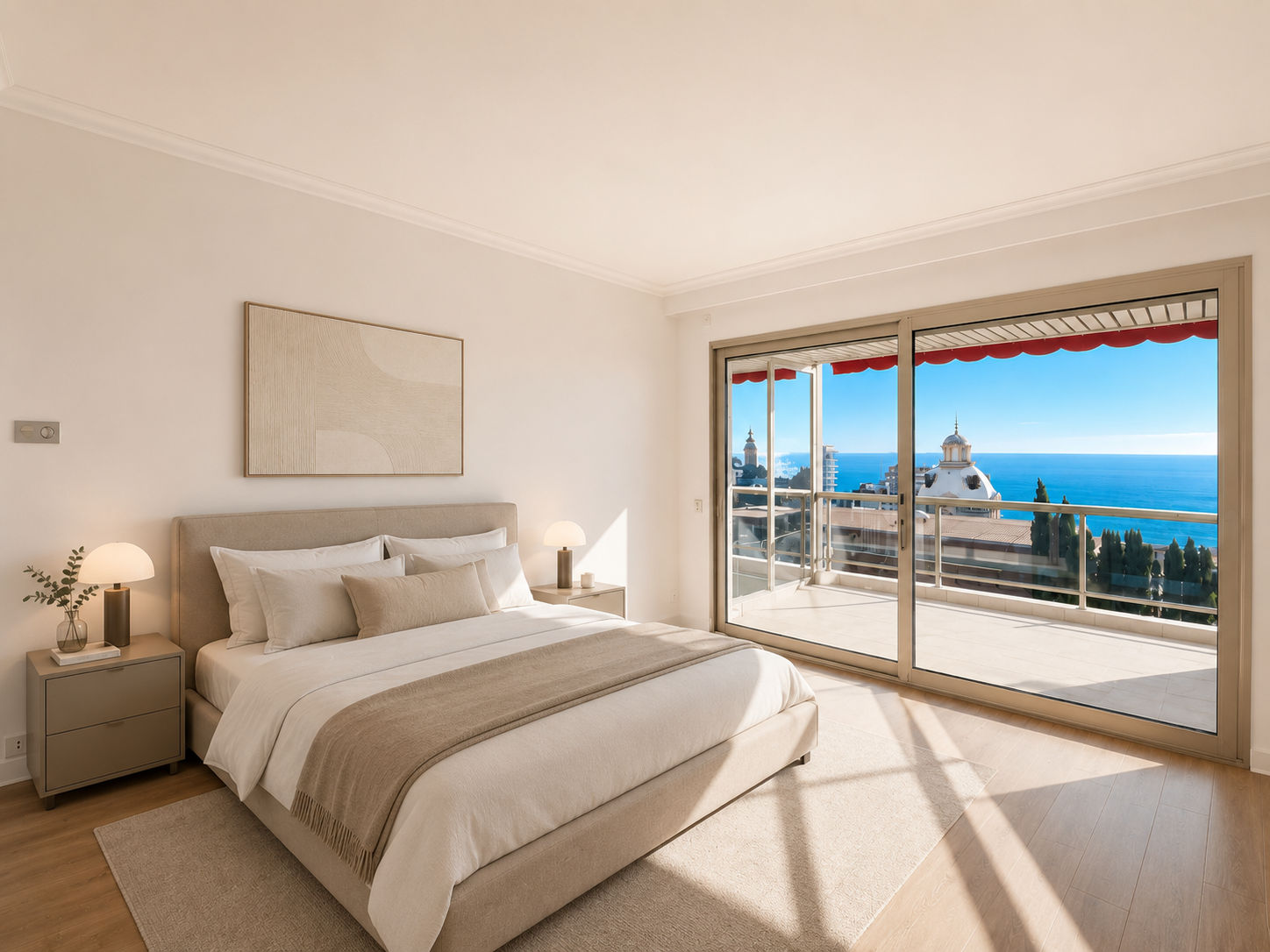
Rental yield in Monaco has long played a secondary role in investors’ strategies. In the Principality, purchasing an apartment has traditionally been driven more by a desire to preserve capital, ensure stability and build a portfolio of rare real estate assets than by the pursuit of an immediate return comparable to that available in other European markets. This hierarchy is nevertheless evolving. The persistent scarcity of supply, the transformation of Monaco’s residential property stock and the needs of an international clientele are contributing to growing interest in rental income.
To assess a real estate investment in Monaco accurately, however, rental income should not be considered in isolation from the asset’s overall performance. Yield must be evaluated comprehensively, taking into account the purchase price, service charges and other costs, rental demand, and the property’s long-term potential for capital appreciation.
Gross rental yield is the ratio between the annual rental income and the property’s total purchase price.
It can be calculated using the following formula: Gross rental yield = annual rent ÷ purchase price × 100. This calculation provides an initial indication, but it is not sufficient to measure the actual profitability of an investment. The following factors should also be taken into account: condominium charges payable by the owner;
maintenance and refurbishment costs; potential periods of rental vacancy; property management fees; acquisition costs; taxation applicable to the owner’s personal circumstances; the property’s potential for capital appreciation.
In Monaco’s luxury real estate market, performance should therefore be assessed on the basis of the overall return, rather than gross rental yield alone.
The Principality has just over two million square metres of residential floor space within a territory of less than two square kilometres. This geographical constraint naturally limits construction opportunities and makes every new development particularly significant.
According to the 2025 Real Estate Observatory published by the Monaco Statistics and Economic Studies Institute, 103 new homes were completed in 2025, mainly in the La Rousse and Moneghetti districts. This delivery followed a year in which no new apartments were completed in 2023. New-build supply therefore comes onto the market in irregular waves, while demand remains strong among an international clientele seeking a primary residence, a pied-à-terre or a long-term base in Monaco.
This imbalance helps support the existing rental market. However, it does not affect all properties in the same way. The quality of the residence, floor area, level, view, terrace, parking facilities and services offered all have a direct impact on rental value and the speed at which a property can be re-let.
IMSEE data also point to a shift in the market towards family apartments and larger properties. In 2025, more than eight out of ten sales reportedly involved apartments with four rooms or more. This particularly high proportion reflects the growing importance of properties intended for long-term residential use.
This trend is also evident in the rental market. International families are looking for apartments offering several bedrooms, outdoor spaces, contemporary amenities, and convenient access to schools, shops and the Principality’s main business districts.
Larger properties may therefore benefit from strong rental demand. However, their yield must be assessed in light of an often very high purchase price and potentially substantial service charges in residences offering a wide range of amenities.
There is no single rental yield applicable across Monaco. Each district has its own pricing structure, type of demand and potential for capital appreciation.
According to estimates published by IMSEE for 2025, prices per square metre vary significantly. Larvotto stands out as the most highly valued district, with an average price of 71,167 € per square metre. In this area, proximity to the sea, recently built residences and the scarcity of available properties generally make acquisitions primarily wealth-preservation investments. The high entry price may compress gross rental yield while providing exposure to one of Monaco’s most sought-after addresses.
By contrast, Jardin Exotique and Les Moneghetti offer more moderate acquisition values, at approximately 43,000 € to 45,000 € per square metre. Depending on the type of apartment and the achievable rent, these districts may provide a different balance between entry price, rental income and potential for capital appreciation.
Monte-Carlo, Fontvieille, La Condamine and La Rousse occupy an intermediate position. Rental performance in these districts depends heavily on the precise location, the condition and quality of the residence, and the property type.
IMSEE figures also highlight the valuation gap between newer developments and older buildings. In 2025, the estimated price per square metre of the most recent developments reached 65,602 €, compared with 42,142 € for buildings constructed before 1940.
This difference does not necessarily mean that a newer building always represents the best investment. Modern residences often offer sought-after amenities such as concierge services, enhanced security, private parking, wellness facilities and high technical standards. These features can support higher rental levels, but they also result in higher service charges. Conversely, a well-located period building may offer a more accessible purchase price or more generous living spaces that remain highly desirable. Its investment potential will, however, depend on its overall condition, the quality of the co-ownership management and any renovation work that may be required.
Rental yield should therefore be assessed on the basis of the individual property and the residence as a whole, rather than solely on the year of construction.
Reducing real estate investment in Monaco to rental yield alone would provide an incomplete picture. According to the 2025 Real Estate Observatory, the total value of resale transactions increased by 49.1% year-on-year, reaching 3.2 billion €. The average resale price stood at 7.6 million €, representing an increase of 26.8%.
These figures should be interpreted with caution, as the Monegasque property market is based on a relatively limited number of transactions. A small number of exceptional sales can significantly influence annual averages. Nevertheless, they illustrate the central role of capital appreciation in investors' overall strategy. Over a long holding period, the rarity of the location, the quality of the building and the property's ability to retain its appeal can become a major driver of investment performance.
The objective is therefore to identify a property capable of generating stable rental income while maintaining strong long-term resale potential.
Monaco does not levy property tax or residential tax in the way many European countries do. Likewise, for the vast majority of its residents, the Principality does not impose a general personal income tax. However, the tax treatment of rental income depends on several factors, including the owner's tax residence, nationality, the ownership structure used to hold the property, and the tax rules applicable in their country of residence.
French and U.S. nationals or tax residents, in particular, may be subject to specific tax obligations. It is therefore essential to seek tailored tax advice before assessing the net return on a real estate investment in Monaco.
The choice of district depends on the buyer's investment objectives. Investors primarily seeking long-term capital preservation and the highest level of exclusivity may favour Larvotto, Carré d'Or, or some of Monte-Carlo's most prestigious residences. Those looking to balance the purchase price with rental income may find attractive opportunities in Jardin Exotique, Les Moneghetti, La Rousse, or certain areas of La Condamine. Fontvieille appeals to residents seeking a quieter lifestyle, convenient local amenities, and a well-planned environment centred around the marina and landscaped public spaces.
In all cases, the investment decision should not be based solely on the district. Two apartments located just a few metres apart can deliver very different levels of performance depending on their floor level, orientation, layout, condition, and the overall quality of the residence.
According to Silvio PIRAS, Director of PIRAS Immobilier: "Rental yield in Monaco should never be assessed in isolation. It must be considered over the long term, taking into account not only the rental income generated, but also the rarity of the property and its potential for capital appreciation. Our role is to analyse all of these factors together in order to guide our clients towards an investment that aligns with their long-term wealth objectives." This approach requires evaluating not only the expected rental income, but also the property's potential liquidity, architectural quality, surrounding environment, the management of the co-ownership, and the future development prospects of the neighbourhood.
PIRAS Real Estate has been advising clients on property sales, rentals, acquisitions and management in Monaco and on the French Riviera since 1976.
PIRAS REAL ESTATE
Château Périgord Residence
6 Lacets Saint Léon
98000 Monaco
From 9 a.m. to 7 p.m. – Our team is here to welcome you
French – Italian – English – Russian – Spanish
This site is protected by reCAPTCHA and the Google Privacy Policy and Terms of Service apply.
